


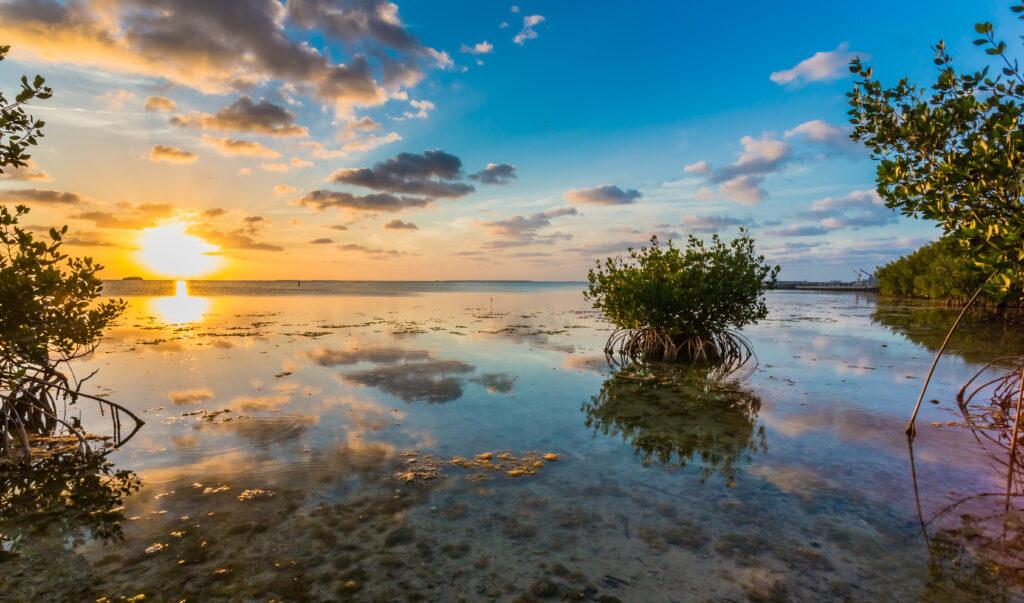
Seventy-five years ago, much of the Indian River Lagoon (IRL) bottom was composed of sand, shell, and natural sediments overlaid by thriving seagrass meadows that supported fish, manatees, and countless other forms of marine life. Over time, the landscape around the lagoon changed. As surrounding lands were developed for agriculture, housing, and other uses, increased stormwater runoff and soil erosion delivered fine sediments and organic matter into the lagoon. These materials gradually accumulated in low-energy areas, forming a soft, fine-grained layer known as muck. In Brevard County alone, muck now covers approximately 6,000 acres of the Indian River Lagoon bottom.
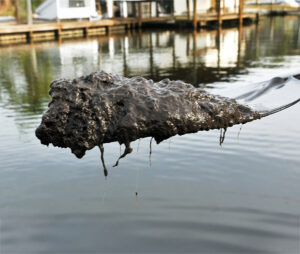 Muck is composed of silt, clay, and organic material from both natural and human sources, including decomposing mangroves, seagrasses, and algae, as well as land-based inputs like soil erosion, grass clippings, and other organic debris. It typically contains over 75% water by weight, giving it a loose, fluid consistency that is easily resuspended by wind, storms, or boat activity. When disturbed, muck increases turbidity, blocking sunlight from reaching seagrass and other submerged vegetation. As the organic matter within muck breaks down, it consumes oxygen and releases nutrients such as nitrogen and phosphorus into the water column. This process can fuel algal blooms, reduce dissolved oxygen, and create anoxic (oxygen-depleted) conditions, contributing to the loss of over 80% of the lagoon’s seagrass, a nursery for most of the lagoon’s marine life and a major source of food for manatees, sea turtles, and other marine life.
Although there are many other sources of pollution, muck is the single largest source, responsible for approximately 35% of nitrogen pollution in the Lagoon. This source must be reduced to restore the health of the lagoon.
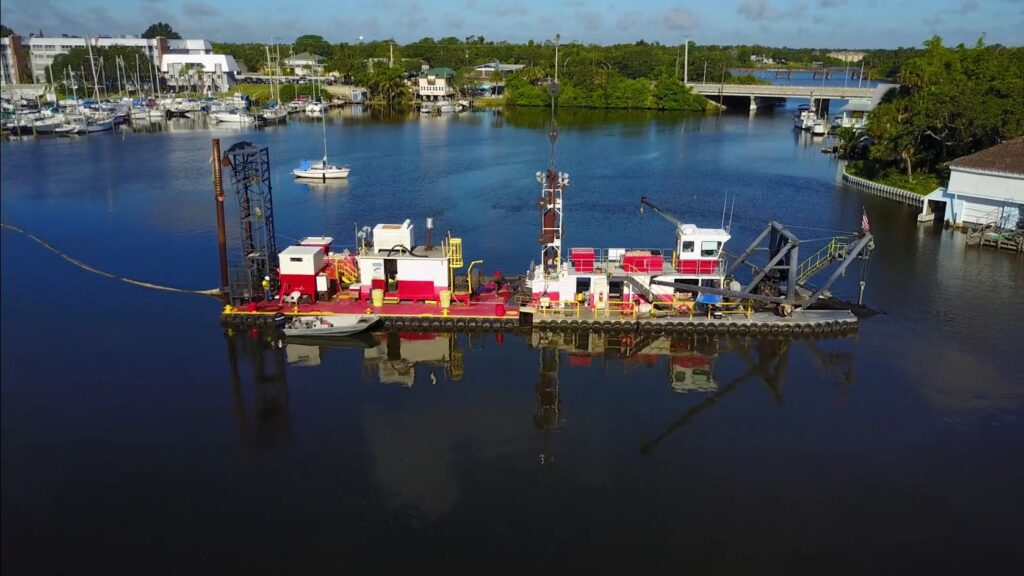
To address this issue, Brevard County’s Save Our Indian River Lagoon (SOIRL) ½¢ sales tax is co-funding restoration projects to manage muck, such as environmental dredging or sand capping projects to either remove muck or contain it to stop the release of nutrients into the water column and restore bottom habitats. Environmental dredging uses specialized equipment to vacuum muck from the lagoon floor and transport it through pipes to a contained upland site. There, solids are separated from the water, and dried sediment is then tested for regulated contaminants to determine whether it can be reused for purposes like agricultural fertilizer. If contaminants are above allowable levels for beneficial use, the muck is disposed of at the landfill. Since the start of the program, over 1.5 million pounds of nitrogen from muck have been removed.
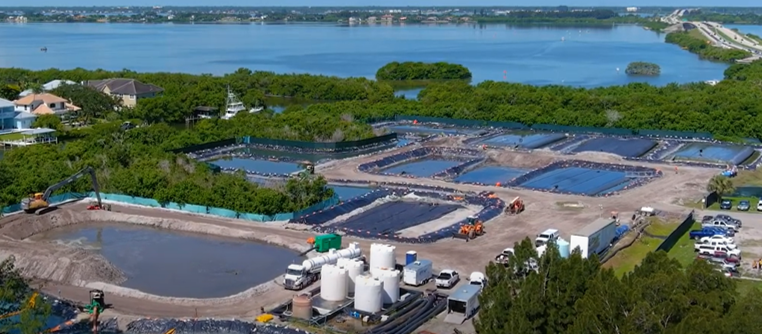
This is a very time-consuming process, but it is constantly being improved by local research studies, which map the content, thickness, and pollution potential of muck to determine which locations will be the most effective at removing pollutants. These deposits are typically found at the mouths of rivers entering the lagoon and in dredged canals and underwater borrow pits around causeways, where muck accumulates and can reach depths of up to 20 feet. As a secondary benefit of the muck dredging process, they have also removed thousands of items of trash from the lagoon floor including tires, tarps, anchors, fishing line, and much more.
You can find the specific locations for these projects in the maps section of the SOIRL website: https://www.brevardfl.gov/SaveOurLagoon/maps
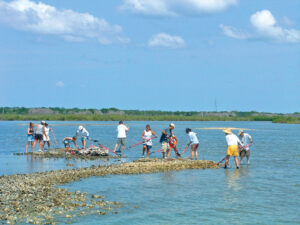
The long-term health of the Indian River Lagoon depends on continued efforts to reduce land-based sources of pollution and prevent further buildup of muck. Enhancing stormwater treatment systems and expanding public awareness programs are key to reducing the amount of muck-forming material that enters the lagoon, ultimately decreasing the need for future dredging.
Hope is on the horizon! With sustained muck management, smarter stormwater practices, and active community involvement, the lagoon’s waters can once again sustain thriving seagrass meadows and the diverse wildlife that call them home.
Learn more about what you can do to reduce muck buildup at www.helpthelagoon.org and see what community projects are amplifying these efforts at Brevard’s SOIRL website at https://www.brevardfl.gov/SaveOurLagoon/
What You Can Do Today:
Support the Brevard Indian River Lagoon Coalition.
Explore MEMBERSHIP and benefits. Or make a DONATION.
Be part of the solution.