



(From Dr. Laura Wilson, Executive Director, Marine Resources Council May 1, 2026)
Dear Brevard Indian River Lagoon Coalition,
When rain falls in your neighborhood, where does it go? A storm drain? Canal? Stormwater pond? For most of us reading this, the answer is that it ultimately ends up in the Indian River Lagoon, carrying fertilizers, pet waste, motor oil, and sediment. Last month, I had the opportunity to sit on a “Homeowner Projects to Reduce Stormwater Impacts” panel for Brevard County’s Save Our Lagoon Citizen Oversight Committee — and what I heard from my fellow panelists gave me hope that the answer can be different.
 While I proposed a Green Stormwater Infrastructure homeowners grant program, other presenters highlighted some truly remarkable community-based programs. Camille Hadley, Executive Director of Little Growers, shared information and success about their neighborhood food forest, native plant garden, pollinator garden, and education projects.
Vinnie Taranto, a member of Indialantic’s Sustainable Community and Resiliency Committee, described Indialantic’s bioswale program to address stormwater-related flooding and pollution.
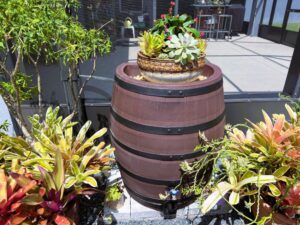 Dani Straub, Melbourne’s Assistant City Engineer, detailed Melbourne’s rain barrel education and rebate program. All these programs highlight the role our communities play in addressing stormwater-related flooding in our neighborhoods and stormwater-related pollution in the Indian River Lagoon.
Following the presentations, one of the questions I posed to the group was: How do we move stormwater management from feeling like a municipal obligation to something homeowners want to do? So often, we think of stormwater as a government problem and something we as individuals cannot significantly affect. Municipalities absolutely have obligations here: upgrading aging infrastructure, requiring better stormwater design in new developments, and maintaining drainage systems. But responsibility doesn’t stop at the property line.
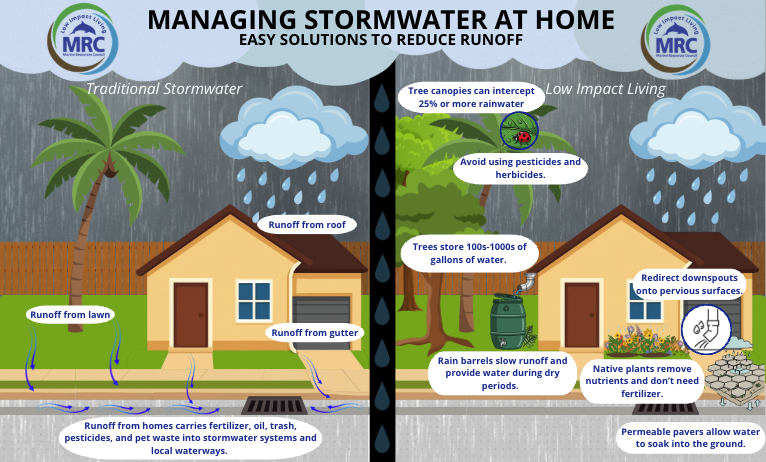
Over 70% of the land in Florida is privately owned and outside direct reach of local governments once the developer turns over the keys. What happens to rainwater on that land is largely up to the people who live there. The reality is that a 1600 sq ft home on a ¼ acre lot produces more stormwater from its roof and driveway than the street in front of it — stormwater that is added to what’s already running down the street. The infrastructure gap isn’t just in city pipes. It’s in our yards and every drop counts.
So, how do we make stormwater management something homeowners want to do? The presentations by panelists offer a clue. Little Growers makes it about food and community. Indialantic’s bioswale program makes it about solving a stormwater problem with neighborhood beautification. Melbourne’s rain barrel rebate makes it simple and saves you money. None of them led with “stormwater” or even “Indian River Lagoon” — they led with something people already care about.
That’s the shift. When a rain barrel becomes a way to water your garden for free, when a native garden addresses food insecurity, when a bioswale turns a chronic flood spot into a landscaped feature — stormwater management stops being an obligation and starts being something worth doing.
To learn more about the Marine Resources Council, visit their website at lovetheirl.org.
What You Can Do Today:
Support the Brevard Indian River Lagoon Coalition.
Explore MEMBERSHIP and benefits. Or make a DONATION.
Be part of the solution.
Right now there are vital VOLUNTEER OPPORTUNITIES available.
SIGN UP today for talking to your neighbors, linking us to groups and organizations where we can speak, pointing us to events and other opportunities to provide educational materials, and how to share LAGOON Education social posts with people you know.